
In today’s hyper-connected world, having a great product or service isn’t enough. If people can’t find you online, you’re invisible to the very customers you’re trying to reach. That’s where digital marketing and specifically SEO comes in.
This guide breaks down what digital marketing really means, why SEO is one of its most powerful pillars, and how you can build a strategy that actually drives results.
What Is Digital Marketing?
Digital marketing is the umbrella term for all marketing efforts that use the internet or electronic devices to connect with customers. Unlike traditional marketing (think TV ads, billboards, or print), digital marketing lets you target specific audiences, measure results in real time, and adjust your strategy on the fly.
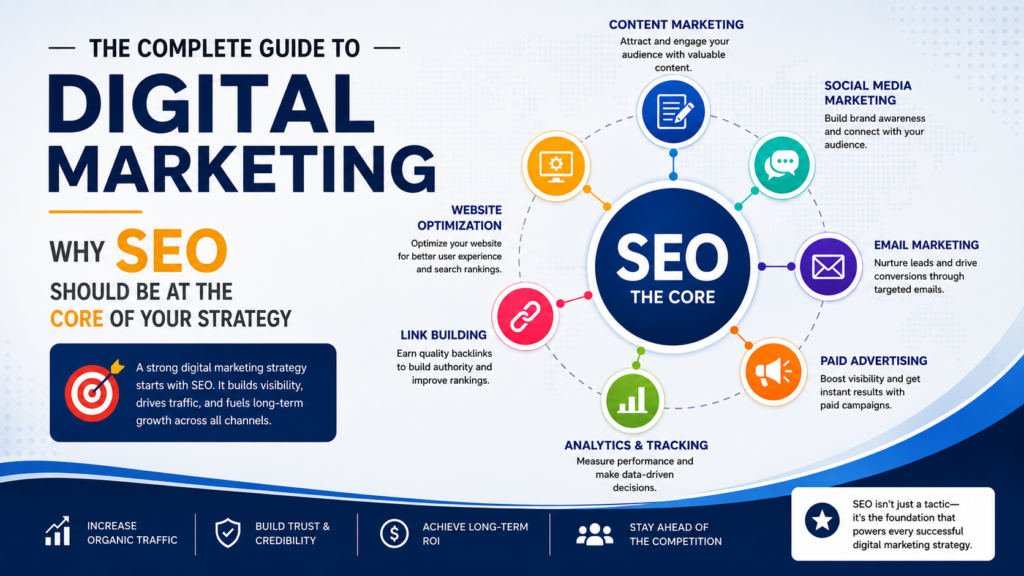
The main channels of digital marketing include:
- Search Engine Optimization (SEO) – improving your visibility on search engines organically
- Content Marketing – creating valuable content to attract and engage audiences
- Social Media Marketing – building brand presence on platforms like Instagram, LinkedIn, and X
- Email Marketing – nurturing leads and retaining customers directly
- Pay-Per-Click Advertising (PPC) – paid ads on search engines and social platforms
- Affiliate and Influencer Marketing – partnering with others to expand reach
Each of these channels works best when they support one another and SEO often forms the foundation that ties them all together.
Why SEO Is the Backbone of Digital Marketing
SEO (Search Engine Optimization) is the practice of optimizing your website and content so that search engines like Google rank you higher for relevant searches. Here’s why it matters so much:
1. It Drives Long-Term, Sustainable Traffic
Unlike paid ads that stop working the moment you stop paying, good SEO keeps generating traffic for months or even years after the initial effort.
2. It Builds Trust and Credibility
Users tend to trust organic search results more than paid advertisements. Ranking high naturally signals authority and reliability.
3. It’s Cost-Effective
While SEO requires time and effort upfront, it doesn’t have the ongoing cost-per-click that paid advertising does — making it one of the highest ROI channels over time.
4. It Improves User Experience
Modern SEO isn’t just about keywords. It’s deeply tied to site speed, mobile-friendliness, and overall usability —things that benefit visitors regardless of how they found you.
Core Elements of an Effective SEO Strategy
On-Page SEO
This involves optimizing individual pages on your website, including:
- Strategic keyword placement in titles, headers, and body content
- Optimized meta descriptions and title tags
- Internal linking structure
- Image alt text and file optimization
- Mobile responsiveness
Off-Page SEO
This focuses on building your site’s authority through:
- Backlinks from reputable websites
- Social signals and shares
- Brand mentions across the web
- Guest posting and digital PR
Technical SEO
The behind-the-scenes work that helps search engines crawl and index your site properly:
- Site speed optimization
- XML sitemaps
- Structured data/schema markup
- Fixing broken links and crawl errors
- HTTPS security
Content SEO
Content is what search engines ultimately rank. Focus on:
- Answering real user search intent
- Creating in-depth, valuable content around target keywords
- Regularly updating and refreshing older content
- Using a mix of formats (blogs, videos, infographics)
Integrating SEO Into Your Broader Digital Marketing Strategy
SEO doesn’t work in isolation it amplifies everything else:
- Content Marketing + SEO: Well-researched, keyword-optimized content ranks better and attracts organic traffic that fuels your entire funnel.
- Social Media + SEO: While social shares don’t directly boost rankings, increased visibility can lead to more backlinks and brand searches.
- Email Marketing + SEO: High-performing blog content (found via SEO) can be repurposed into email newsletters to nurture your list further.
- PPC + SEO: Running paid ads alongside organic efforts lets you dominate the search results page while gathering keyword data to refine your SEO strategy.
Getting Started: A Simple Action Plan
- Audit your current website for technical SEO issues and content gaps
- Research keywords relevant to your audience and industry
- Create a content calendar built around search intent
- Optimize existing pages with better titles, meta descriptions, and internal links
- Build quality backlinks through outreach, partnerships, and great content
- Track your performance using tools like Google Search Console and Analytics
- Iterate consistently — SEO is a long game, not a one-time fix
Final Thoughts
Digital marketing is a multi-channel game, but SEO remains one of the most reliable ways to build sustainable visibility and trust with your audience. When you treat SEO not as a standalone tactic but as the connective tissue of your broader marketing strategy, you set yourself up for compounding, long-term growth.
Start small, stay consistent, and let your search rankings work for you around the clock.